
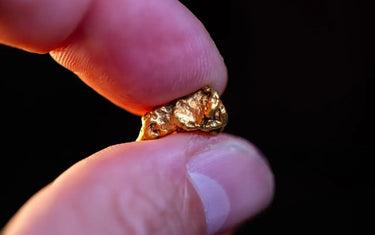
In today’s market, gold buyers face a constant threat from sophisticated counterfeits—from heavy gold plating to dangerous tungsten-core bars that mimic real gold's exact density. Relying on outdated acid tests risks both valuable jewelry and catastrophic financial loss. Precision gold testing equipment is your ultimate risk firewall, protecting profit margins while speeding up counter transactions with instant, non-destructive accuracy.
I. Core Evaluation Criteria for Commercial Gold Testing

Before selecting a gold tester for your counter or field operations, evaluate how well a device meets these four non-negotiable requirements:
- Non-Destructive Testing (NDT): Modern retail customers and sellers will not tolerate deep scratches, file marks, or acid burns on their items. A true gold tester must evaluate an item’s authenticity without compromising its aesthetic value or resale weight.
- Anti-Fraud Capability & Testing Depth: Surface-level analysis leaves your shop vulnerable to thick gold plating and tungsten cores. Your testing workflow must include tools that can penetrate beyond the outer skin to verify the internal core of coins, bars, and heavy jewelry.
- Speed & Workflow Efficiency: High-volume pawn counters require instant, over-the-counter verification. The ideal tester yields clear, definitive results in seconds and features an intuitive interface that requires minimal staff training.
- Purity & Multi-Element Coverage: Beyond distinguishing real gold from fake, buyers need precise karatage determination (6K through 24K) and fineness percentages. Equipment should ideally recognize other valuable precious metals, including platinum, silver, and palladium.
II. Comparison Matrix of Gold Detection Technologies
Different testing technologies serve different operational roles. The table below outlines how the primary testing methods compare across key technical parameters.
|
Technical Route |
Core Advantages |
Limitations |
Penetration Depth |
Price Range |
Representative Application Scenarios |
|
X-ray Fluorescence (XRF) |
Extremely high precision, completely non-destructive, full multi-element breakdown |
High capital cost, limited to surface-layer analysis |
Shallow layer (surface-level) |
Highly Expensive |
High-value bulk recycling, estate appraisal, laboratory verification |
|
Conductivity / Electromagnetic |
Penetrates deep below the surface; definitive defense against tungsten cores |
Requires known sample thickness or geometric shape |
Deep layer (full penetration) |
Moderately Expensive |
Gold bullion bars, investment coins, melted scrap verification |
|
Electronic Specific Gravity |
Leverages Archimedes' principle; non-destructive and cost-effective |
Cannot test hollow items, sealed pieces, or stone-set jewelry |
Overall (bulk density) |
Moderate |
Solid gold jewelry, cast ingots, plain gold chains |
|
Electrochemical Probe |
Rapid results, portable, no hazardous acid required |
Requires regular gel/probe calibration; must touch bare metal |
Shallow layer (point contact) |
Budget to Moderate |
Rapid counter screening, mobile buying, estate calls |
III. Optimal Equipment & Specific Model Recommendations
1. Top-Tier Non-Destructive High-Precision Selection (Bulk Acquisition & High-Value Transactions)
For high-volume gold buyers and estate appraisers handling tens of thousands of dollars in precious metals daily, X-ray Fluorescence (XRF) Analyzers offer the highest level of speed and analytical detail.
Thermo Scientific Niton DXL

- Positioning: The industry-benchmark desktop XRF analyzer engineered specifically for retail jewelry stores and pawnshop counters.
- Key Features: Designed with a closed chamber and a protective lead-glass viewing window to ensure operator safety during high-frequency testing. It delivers a comprehensive elemental breakdown—showing exact percentages of gold, silver, copper, zinc, platinum, and palladium—in under five seconds. Its internal software automatically flags gold plating and non-standard alloys, eliminating human error during high-stakes trades.
Olympus Vanta GX

- Positioning: A precision benchtop precious metal analyzer built for rigorous verification.
- Key Features: Exceptional detection limits and accuracy. The Vanta GX instantly identifies gold karatage and flags dangerous surface plating or hazardous elements like lead and cadmium. Test results can be directly exported, archived, or printed on itemized receipts to provide customers with transparent proof of valuation.
2. Best Anti-Counterfeiting & Deep Penetration Selection (Gold Bar & Coin Buyers)
Because tungsten has a density (19.25 g/cm³) nearly identical to pure gold (19.30 g/cm³), surface-level testers and basic scales can be fooled by gold-plated tungsten bars. Electromagnetic and conductivity testers solve this problem by reading through the interior of the metal.
Sigma Metal Metrics PMV Pro / Precious Metal Verifier

- Positioning: Recognized across the bullion industry as the ultimate defense against tungsten-core counterfeits.
- Key Features: Unlike optical or surface X-ray devices, the PMV Pro uses electromagnetic waves that pass entirely through gold bars or coins. It measures the resistivity of the internal metal in seconds without requiring liquid or surface filing. Equipped with dual-side sensors and external probes, it easily verifies small fractional coins up to 10 oz gold bars, ensuring that the center of the bullion matches its surface purity.
3. Cost-Effective, Non-Destructive Preliminary Screening (Standard Countertop Assessment)
For shops seeking a reliable, non-acid method to test solid jewelry without spending five figures on XRF technology, Electronic Specific Gravity Testers offer an ideal balance of accuracy and affordability.
Alfa Mirage GK-300 / GKS-3000

- Positioning: The gold-standard Japanese industrial densitometer used in pawnshops worldwide.
- Key Features: Utilizing the classic Archimedes water displacement principle, these digital units calculate the precise specific gravity of solid precious metals. The digital display instantly converts density into exact karat values (from 9K to 24K) and purity percentages. They are exceptionally reliable for solid gold scrap, cast rings, and bullion blocks, offering a clean, chemical-free testing process.
4. High-Frequency, Rapid Countertop Testing (Portable & Budget-Friendly)
When you need an affordable, portable gold tester for everyday counter transactions or off-site buying trips, Electronic Pen Probe Testers deliver rapid results without the mess or hazards of traditional nitric acid kits.
GemOro AuRacle Analyzer

- Positioning: The benchmark entry-level electronic gold tester for daily pawn counter screening.
- Key Features: Compact and battery-operable, the AGT1 uses a pen probe with conductive gel to test yellow and white gold from 6K to 24K, as well as platinum. It yields instant readings on an easy-to-read analog display without destroying the metal, making it a reliable workhorse for quick, first-pass evaluations.
GemOro AuRacle Pro

- Positioning: The advanced digital version designed for scrap buyers requiring enhanced precision.
- Key Features: Builds upon the AGT1 platform with a digital LED touch display and improved circuitry for faster readings. It features enhanced calibration stability, step-by-step state-of-charge tracking, and precise detection ranges that clearly flag under-karat gold, base metal alloys, and gold plate.
IV. Practical Combined Techniques for Countering Common Gold Counterfeits
Professional counterfeiters build fakes to bypass single-method testing setups. To build a bulletproof evaluation workflow, combine multiple testing technologies based on the specific risk profile of the item:
- Handling Thick Gold-Plated & Gold-Filled Items: Plating that measures several microns thick can easily fool superficial touchstone acids and basic probe testers. Strategy: Perform an initial surface check using a GemOro AuRacle or XRF analyzer. If the item feels unusually light or exhibits suspicious wear at the seams, cross-verify its overall bulk density using an Alfa Mirage Specific Gravity Tester.
- Detecting Tungsten-Core Gold Bars and Coins: Because tungsten matches gold's density, specific gravity scales alone cannot distinguish a tungsten-core bar from a pure gold ingot. Strategy: Always pass investment gold bars, bullion coins, and thick ingots through an electromagnetic conductivity device like the Sigma Metal Metrics PMV Pro. The electromagnetic field penetrates through the outer gold shell to immediately detect internal tungsten inserts.
- Evaluating Complex Alloys & Low-Karat Scrap: Unmarked estate pieces and foreign gold often contain unusual copper, nickel, or zinc ratios that skew basic electronic meters. Strategy: Use an XRF Spectrometer for a complete elemental percentage readout, or perform multi-point probe testing across different wear points on the piece using the GemOro AuRacle Pro to confirm uniform purity.
Safeguarding Your Operations
Building an effective gold testing setup goes beyond selecting quality hardware—it requires proper operational protocols:
- Regular Calibration: Electronic probes and specific gravity scales require routine calibration using standardized reference materials (such as pure 24K calibration plates or known calibration weights) to maintain factory accuracy over time.
- Regulatory & Radiation Safety: If your business deploys XRF analyzers, ensure staff adhere to local radiation safety protocols, maintain proper shielding practices, and fulfill any state licensing or registration mandates.
Equipping your business with the right testing equipment transforms gold buying from a high-risk gamble into a profitable, standardized science.
Looking to upgrade your counter setup or expand your mobile buying gear? Explore LuxgoldTools to discover our selection of testing equipment. We specialize in both portable electronic gold testers and high-precision density units—giving your business the exact tools needed to trade with total confidence.
