
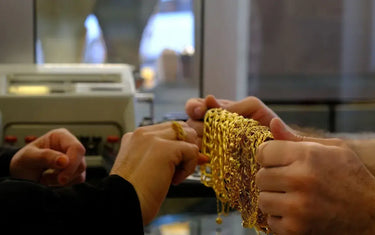
With gold prices soaring to record highs, a reliable gold tester is no longer optional—it is a vital financial safeguard against costly counterfeits and off-karat alloy mixes. However, retail jewelry counters and custom goldsmith benches face vastly different operational risks, from avoiding non-destructive trade-in scams to ensuring pure casting melts. Because one size never fits all, choosing the right testing technology starts with matching the device to your daily workshop or storefront environment.
I. Retail Showcase vs. Goldsmith Bench: The Core Difference

Before evaluating technical specs, consider where the device will sit and what it needs to accomplish every day.
The Jeweler’s Focus: Customer Trust & Zero Surface Damage
- 100% Non-Destructive Testing (NDT): Customers trading in heirloom jewelry or shopping for estate pieces will not tolerate file marks, deep scratches, or nitric acid burns. Every test must leave the piece in pristine condition.
- Speed and Visual Transparency: Counter transactions require rapid readouts—ideally under 10 seconds. On-screen data or digital displays allow the buyer to walk the customer through the valuation step-by-step, using objective data to eliminate friction during price negotiations.
The Goldsmith’s Focus: Material Purity & Adaptability to Raw Metals
- Physical Form Adaptability: Bench jewelers routinely work with irregular shapes—raw casting grain, clipped wire, thick gold pucks, melted scrap buttons, and freshly poured ingots. The testing setup must handle solid metal shapes without requiring flat or polished surfaces.
- Compact Footprint & Durability: Workshop benches are crowded, high-traffic spaces exposed to polishing dust, soldering flux, and torch heat. A bench tester needs to be compact, sturdy, and focused on internal core density or alloy composition rather than flashy consumer-facing software.
II. XRF vs. Density vs. Probes: Which Technology Fits Your Work?
Different testing methods interact with precious metals in unique ways. Understanding where a technology shines—and where it falls short—prevents costly operational blind spots.
|
Technology |
Core Principle |
Best For |
Practical Workshop & Counter Value |
|
XRF (X-Ray Fluorescence) |
X-ray excitation for full elemental percentage analysis |
Jewelers (Top Commercial Choice) |
Delivers a complete chemical breakdown (Au, Ag, Cu, Pt, Pd, Ni) in seconds. 100% non-destructive and highly impressive to retail clients. |
|
Electronic Specific Gravity Meter |
Archimedes' principle (water displacement vs. dry weight) |
Smiths (Top Workshop Choice) |
Calculates the precise bulk density of solid ingots, poured gold buttons, and scrap melts. Highly accurate, cost-effective, and uses no chemical consumables. |
|
Electronic Conductive Probe |
Surface electromagnetic resistance and impedance reading |
Both (Initial Screening & Field Use) |
Acid-free, highly portable, and quick to learn. Excellent for rapid over-the-counter karat verification and off-site estate buying trips. |
|
Touchstone & Nitric Acid |
Chemical reaction on a scratched slate surface |
Smiths (Low-Cost Backup Only) |
Traditional method requiring physical rubbing. Semi-destructive nature makes it unsuitable for finished retail goods, though useful for rough scrap sorting. |
II. Key Buying Criteria: What to Look For Before Spending Your Money

When budgeting for a gold tester, prioritize features that match your primary day-to-day workflow.
Buying Criteria for Jewelers
- Anti-Counterfeiting & Full Alloy Breakdown: Can the machine look past surface finishes to flag thick gold plating? Does it break down secondary metals (like silver, copper, or nickel) so you can accurately value 9K through 24K items?
- Testing Speed & Queue Management: Does the device return definitive results in under 10 seconds? Slow testing workflows create awkward silences and stall busy sales floors.
- Data Logging & Receipt Generation: Can test results be exported, archived, or printed on a receipt? Written proof builds credibility during estate valuations and protects against post-sale disputes.
Buying Criteria for Smiths
- Bench Footprint: Will the equipment take up half your soldering station, or can it tuck neatly beside your digital scale?
- Geometry Independence: Can it accurately test a handful of casting grain or an irregular poured button just as easily as a flat sheet?
- Focus on Accuracy Over Aesthetics: Prioritize repeatability, stable load cells, and core metal penetration over elaborate commercial software packages.
IV. Top Gold Tester Recommendations: By Business Type & Model
Group 1: Best Choices for Jewelers and Gold Buyers
(Commercial Use, High Precision, High-Volume Transactions)
1. Thermo Scientific Niton DXL (Benchtop XRF Analyzer)

- Target Users: High-end retail showrooms, high-volume gold buyback counters, and pawn operations.
- Why We Recommend It: The Niton DXL represents the benchmark for counter-based X-ray fluorescence analysis. Operating within a shielded, enclosed chamber, it delivers a precise elemental percentage breakdown in 3 to 5 seconds. Its proprietary AuDIT™ software automatically flags base-metal plating, while a transparent lead-glass shield lets customers watch the non-destructive process firsthand.
- Budget Range: High ($18,000-$28,000).
2. GemOro AuRacle Pro AGT3 (Digital Electronic Gold Tester)

- Target Users: Retail jewelry stores, bench appraisers, and mobile buyers seeking a rapid, acid-free screening tool.
- Why We Recommend It: The AGT3 utilizes a pen probe filled with conductive gel to read electromagnetic resistance across yellow gold, white gold (6K–24K), and platinum. Its intuitive digital touchscreen displays exact karat readings without requiring surface filing or chemical acids, making it a clean, client-friendly alternative to traditional touchstones.
- Budget Range: Mid-range / Accessible ($720–$1065).
Group 2: Best Choices for Goldsmiths and Jewelry Workshops
(Solid Casting, Alloying, Workshop Durability)
1. Alfa Mirage GKS-3000 / GK-300 (Industrial Electronic Densimeter)

- Target Users: Custom goldsmiths, casting houses, and bench jewelers working with solid gold scrap and poured ingots.
- Why We Recommend It: Built around Archimedes' water displacement principle, the Japanese-engineered Alfa Mirage series calculates exact specific gravity up to 3000g. It instantly converts bulk density into precise karat values without requiring chemical reagents or damaging metal samples. It is the gold standard for verifying solid cast rings, ingots, and melted buttons before alloy adjustments.
- Budget Range: Mid-range / Practical ($1,200–$4,400).
2. Sigma Metal Metrics PMV Pro (Precious Metal Verifier)

- Target Users: Workshops purchasing raw gold bullion bars, thick plate stock, or heavy scrap melts.
- Why We Recommend It: Unlike optical or surface-level XRF devices, the PMV Pro uses deep-penetrating electromagnetic waves to read through the entire thickness of a metal sample. It checks resistivity deep within the core, effortlessly detecting internal tungsten inserts or base-metal cores hidden beneath genuine gold shells.
- Budget Range: Mid-to-High ($2,300–$4,600).
V. The Cost of Choosing the Wrong Gold Tester: Common Workshop & Counter Pitfalls
Investing in gold testing equipment only protects your bottom line if the technology matches the material being tested.
-
Pitfall 1 (Jewelers): Relying Solely on Surface Probes for Heavy Buybacks.
Basic surface meters read only the outer few microns of a sample. Sophisticated counterfeits—such as thick electroplated brass or heavy gold-filled chains—easily fool point-contact pens. Jewelers handling high-value buybacks should cross-verify suspicious pieces using specific gravity or deep-penetration electromagnetic meters. -
Pitfall 2 (Goldsmiths): Buying Oversized Commercial XRFs for Casting Benches.
While XRF analyzers excel at surface elemental analysis, their X-rays penetrate only 5 to 10 microns deep. Using an XRF unit to test a thick, newly poured gold button can give a false reading if the melt was improperly stirred, as surface segregation occurs during cooling. For solid workshop melts, hydrostatic density testing remains the more reliable metric for total volume purity. -
Pitfall 3 (General): Skipping Routine Zero-Point and Calibration Protocols.
A digital specific gravity scale must be level and calibrated using certified weights; water temperature shifts directly alter density calculations. Similarly, XRF units and pen probes require regular baseline checks using OEM 24K reference plates. Neglecting calibration leads to karat drift, resulting in under-valued buybacks or improper casting mixes.
Choosing the Right Fit for Your Business
Selecting the ideal gold tester comes down to matching the physics of the equipment to your primary daily operations:
- Choose a Commercial Unit (XRF or Digital Pen Probe) if your priority is rapid, 100% non-destructive testing, visual customer proof, and high-volume retail transactions.
- Choose a Workshop Unit (Industrial Specific Gravity Scale or PMV) if your focus is melting scrap buttons, verifying solid castings, formulating custom alloys, and keeping equipment footprints small on a working bench.
Equipping your business with the right testing hardware turns gold buying and manufacturing from a high-risk gamble into a predictable, profitable science.
Ready to Upgrade Your Counter Setup or Bench Gear?
Explore LuxgoldTools to discover our full selection of professional testing equipment. From the portable GemOro AuRacle Pro AGT3 for rapid counter checks to the high-precision Alfa Mirage GKS-3000 / GK-300 for workshop density verification, we provide the exact tools you need to trade, melt, and craft with total confidence.
