
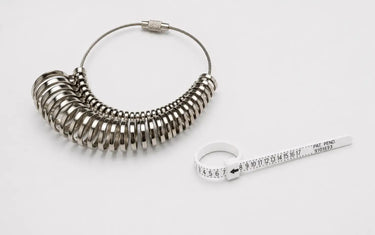
Getting your ring size wrong can mean missed proposal moments, tedious returns, and expensive resizing fees. While plastic options might seem convenient, metal ring sizers are far superior in accuracy because they never flex or deform under pressure. In this guide, we break down why metal vs. plastic matters—and how to guarantee a perfect fit every single time.
Quick Comparison Table
|
Comparison Criteria |
Metal Ring Sizer |
Plastic Ring Sizer |
|
Measurement Accuracy |
★★★★★ (Extremely precise) |
★★★☆☆ (Moderate/prone to error) |
|
Resistance to Deformation |
100% rigid; zero flex |
Susceptible to stretching (belts) or warping (rings) |
|
Real-Wear Simulation |
Replicates the actual weight, edges, and feel of real jewelry |
Friction, weight, and hardness differ from real metals |
|
Durability/Lifespan |
Lifetime tool; highly wear-resistant |
Prone to scratches, deformation, and faded markings |
|
Best For |
Fine jewelry, engagement rings, professional benches |
Low-cost, portable try-ons; casual fashion jewelry |
In-Depth Analysis: Key Differences Between Metal and Plastic

1. Accuracy Comparison
-
The Plastic "Deformation Trap": Plastic measuring tools typically come in two formats—flexible zip-tie belts and individual molded plastic ring sets. Both introduce potential accuracy issues:
- Plastic Belts/Straps: When pulled tight around the base of a finger, soft plastic stretches easily. Forcing flexible plastic over a prominent knuckle compresses the band, giving a false, undersized reading that causes actual metal rings to get stuck.
- Molded Plastic Rings: While rigid, low-cost plastic ring sets often lack precision machining, feature inconsistent inner diameters, and lack the firmness needed to test true joint resistance.
- The Metal "Fixed Inner Diameter": A traditional metal ring gauge features solid individual bands crafted with precise internal tolerances. Because metal offers zero flex, it accurately reveals any resistance at the knuckle. If a metal sizer won't pass over your joint, a solid gold or platinum band won't either.

2. Real-Wear Feel and Friction
- Edges and Thickness: Real jewelry bands have distinct edge profiles, wall thicknesses, and substantial weight. Metal measuring rings mirror these physical proportions, reproducing the exact tactile drag you feel when putting on a real ring.
- The Sensation of "False Smoothness": Plastic tools—especially thin belts—feature soft edges and a light weight that slide over skin unnaturally easily. This low-friction fit creates a false sense of comfort, tricking you into ordering a size that feels far too tight once crafted in solid, heavy metal.

3. Durability and Environmental Stability
- Thermal Expansion & Material Aging: Flexible polymers and soft plastics respond quickly to ambient temperature shifts. Body heat or warm air causes plastic to soften and expand, skewing fine measurements. Over time, printed or molded numbers on plastic tools wear away and become unreadable.
- Professional Stability: Metal sets made from stainless steel or zinc alloy remain dimensionally stable across temperature changes. Their sizing numbers are typically laser-etched or deep-stamped directly into the metal surface, ensuring markings never fade or rub off during routine bench work.
Recommended Use Cases for Each Measuring Tool
When Should You Choose a Metal Ring Sizer?
- High-Stakes Purchases: Essential when sizing for diamond engagement rings, custom wedding bands, or solid karat gold and platinum pieces.
- Challenging Finger Shapes: Ideal for individuals with pronounced knuckles and narrower finger bases, where checking joint clearance is critical.
- Professional & Frequent Use: A must-have tool for jewelry bench workers, studio designers, e-commerce store owners, and avid jewelry collectors.
When Is a Plastic Ring Sizer Sufficient?
- Casual Fashion Jewelry: Perfect for low-cost, adjustable, or open-back fashion rings where exact millimeter precision isn't required.
- Remote Customer Mailers: Useful as a lightweight, disposable try-on tool mailed by online retailers for rough estimations.
- Quick Emergency Checks: Handy for a fast, rough measurement when professional measuring sets aren't available.
Professional Guide: How to Ensure 100% Accurate Measurements
Even the finest metal sizing set won't save a measurement if your technique is off. Follow these steps to ensure a perfect fit:
- Timing Is Everything: Always measure your fingers in the late afternoon or evening when your hands are warm and at their fullest size. Avoid measuring first thing in the morning, right after a workout, or when your hands are cold, as fingers can shrink up to half a size.
- Pass the Knuckle Test: A properly fitted ring sizer should require a gentle, firm push to slide over the knuckle—a state jewelers call a snug fit. It shouldn't be painful to remove, but it definitely shouldn't slip off effortlessly without resistance.
- Take the Average: Measure the target finger three separate times. Re-check the size on a different day or under varying room temperatures before finalizing your order.
Conclusion
When sizing a ring you plan to wear for a lifetime, precision is non-negotiable. While flexible plastic options offer convenience for quick checks, a metal ring sizer is the only tool that provides complete accuracy for fine jewelry.
Whether you need a lifetime stainless-steel gauge set for your bench or budget-friendly try-on loops for your store, LuxgoldTools has you covered. Shop Precision Metal & Plastic Ring Sizers at LuxgoldTools.
