
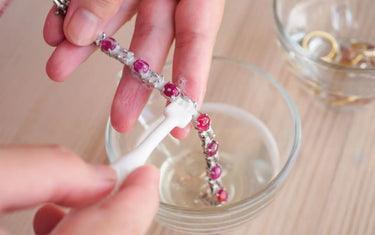
Jewelry is more than just ornamentation. Daily wear leads to dullness. Choosing the wrong cleaning liquid can cause permanent damage. Metal may discolor. Gemstones might crack. This guide helps you navigate retail products safely. We focus on selecting the most effective jewelry cleaner solution for your specific collection.
I. Core Decision Logic: Find the Right Match
Before buying, categorize your jewelry. One size does not fit all.

Precious Metals & Hard Gemstones
This group includes gold, platinum, diamonds, rubies, and sapphires. These materials are durable. However, they easily attract body oils and lotions. You need a jewelry cleaner solution with strong degreasing capabilities. These formulas break down film to restore fire and brilliance.
Sterling Silver Jewelry
925 Silver is different. It reacts with sulfur in the air. This causes tarnish. Your silver eventually turns black. For this, you must use a specialized silver dip. These contain anti-tarnishing agents. They chemically reverse the oxidation without heavy scrubbing.
Delicate & Porous Gemstones
Pearls, opals, turquoise, and emeralds are fragile. They are "porous." This means they absorb liquids. Strong acids or alkalis will ruin them. They require "ultra-mild" solutions. Often, a gentle wipe is better than a full soak.
II. Key Considerations: Professional Evaluation Criteria
How do you spot a high-quality product? Evaluation requires looking at three specific dimensions.

1. Chemical Integrity (Ingredient Safety)
- Ammonia-based vs. Ammonia-free: Ammonia offers incredible power. It makes diamonds sparkle instantly. But it smells pungent. It can also damage plated jewelry. Ammonia-free formulas are the modern standard. They are gentler on your skin and the environment.
- Scent & Irritancy: Quality products should not smell like a laboratory. If the odor is overwhelming, the chemicals are likely too harsh. Look for "bio-degradable" labels for extra safety.
2. Ergonomic Design (User Experience)
A professional-grade jewelry bath is more than just liquid.
- Integrated Basket: Excellent products include a plastic strainer. It lets you retrieve tiny items like stud earrings easily. It also prevents your fingers from touching the chemicals.
- Detail Brush: Look for a brush with moderate firmness. It must dislodge grime from tiny prongs. However, it shouldn't be so stiff that it scratches soft 18K gold.
3. Reaction Speed and Efficacy
Time matters. Top-tier solutions follow the 2-Minute Rule. Stains should vanish within 30 to 120 seconds. If a product requires an hour of soaking, the formula is likely weak or outdated.
III. Scenario-Based Product Recommendations
Different situations require different tools. Based on professional performance, here are the top recommendations for specific jewelry types:
|
Scenario |
Recommended Product |
Key Rationale |
|
|
Diamond & Gold Brilliance |
A biodegradable UK formula that restores brilliance in 2 minutes. Specifically targets stubborn grime on gold and precious stones. |
 |
|
|
Advanced Gold & Platinum Care |
Ammonia-free with an advanced polymer formula that helps reduce the appearance of fine scratches in metal settings. |
 |
|
|
Heavy-Duty Silver Restoration |
Specifically formulated to cut through heavy, stubborn tarnish while leaving an anti-tarnish protective shield. |
 |
|
|
Fragile & Delicate Stones |
An ultra-gentle, ammonia-free soak for "handle with care" pieces like pearls, opals, and turquoise. |
 |
IV. Absolute No-Go Zones: A Guide to Avoiding Pitfalls
Even the best jewelry cleaner solution can be dangerous if misused.
- Porous Gemstones: Never immerse pearls or turquoise in standard dips. They will lose their luster. They may even crack.
- Plated Jewelry: Fashion jewelry often has thin plating. Strong solutions can cause the gold or silver layer to peel off.
- Glue-Set Jewelry: Do not soak items where stones are glued in. The liquid can dissolve the adhesive. Your gems will simply fall out.
V. Advanced Tips: The "Finishing Touches"
Cleaning is a two-step process.
Thorough Rinsing
Always rinse jewelry under running warm water. This removes chemical residue. If left on, chemicals can cause skin irritation or metal spotting.
Secondary Polishing
Liquids remove dirt. They do not remove scratches. To achieve a mirror-like shine, use a Polishing Cloth. This physical buffing adds the final touch of luxury.
Proper Storage
Keep your solution in a cool, dark place. If the liquid becomes cloudy or black, stop using it. Dirty solution can transfer grime back onto your jewelry.
Summary
Choosing the right jewelry cleaner solution is an act of preservation. First, identify your materials. Then, select a formula based on safety and speed. Remember, diamonds need degreasing, while silver needs tarnish removal. Always handle delicate stones with extreme caution.
Ready to restore your collection's original glow? Visit the Luxgoldtools official website today. We offer a curated selection of professional-grade Jewelry Cleaner Solution products and maintenance equipment to keep your treasures shining for years to come.
