
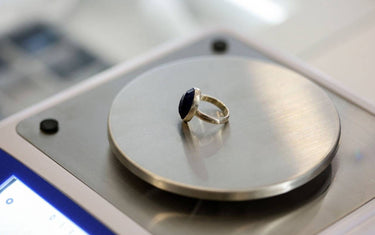
With 2026 gold prices at record highs, a mere 0.01g error can drain your monthly profits. Top-tier jewelers no longer buy "scales"—they invest in precision instruments to safeguard their bottom line. This guide reveals the rigorous 2026 standards used by industry leaders to stop the leak and secure every milligram of value.
I. The "Top Jeweler" Standard: 3 Non-Negotiable Features
Before looking at brands, you must understand the technology that separates a professional jewelry scale from a consumer-grade toy.

1. Legal for Trade (Regulatory Compliance)
If you buy or sell gold, jewelry, or stones, your scale must be "Legal for Trade." In the US, this means NTEP certification; in Europe, it requires the CE mark. Using an uncertified scale for commercial transactions isn't just unprofessional—it’s a legal liability. Top jewelers prioritize these certifications to build ironclad trust with their clients.
2. Sensor Technology: Electromagnetic vs. Load Cell
Most basic scales use "Load Cell" sensors, which rely on physical strain. However, for 2026, the elite standard is the Electromagnetic Force Sensor. While load cells are great for bulk weighing, electromagnetic sensors provide overwhelming superiority in ultra-high precision. They offer faster stabilization and are less prone to the "drifting" errors that plague cheaper equipment.
3. Internal Calibration (Automatic Self-Calibration)
Temperature fluctuations in a busy studio can shift a scale's accuracy. Elite studios prefer scales equipped with internal mechanical weights. These systems detect environmental changes and calibrate themselves automatically, minimizing the risk of human oversight and environmental error.
II. Best Jewelry Scales of 2026 by Workflow
Top-tier jewelry studios understand that no single scale can perfectly handle every task. Based on the latest 2026 hardware standards, here are the best selections for your core application scenarios:
1. Best for Gemstones & Diamonds

- Top Pick: Stuccler® JD Series Jewelry Precision Balance
- Why Top Jewelers Choose It: This is the pinnacle of jewelry weighing. It features a high-end Electromagnetic Force Sensor and Fully Automatic Internal Calibration. When dealing with high-carat diamonds, its 0.1mg (0.001ct) accuracy is non-negotiable.
- Key Specs: Models like the JD-R12W offer 120g/600ct capacity with 0.1mg accuracy. It includes a specialized round draft shield and six-level shockproof adjustments.
- The Verdict: The "Gold Standard" for diamond dealers and gemologists who demand laboratory-grade measurement integrity.
2. Best for Karat Gold Alloying & Casting

- Top Pick: Stuccler® SHINE Series Precision Balance (Large Pan)
- Why Top Jewelers Choose It: Casting requires bulk weighing without sacrificing precision. The SHINE series utilizes a robust square pan designed for heavy crucibles and large batches of grain.
- Key Specs: Capacities range up to 20,000g (20kg). For most studios, the 2kg or 3kg models with 0.01g accuracy provide the perfect balance for alloying Karat gold.
- The Verdict: The primary choice for busy manufacturing floors and casting houses requiring durability and speed.
3. Best for Scrap Gold & Pawnshops

- Top Pick: Tanita Carat Scale TANITA-Dual Display KP601
- Why Top Jewelers Choose It: Trust is everything in resale. The dual-display allows both the merchant and the customer to see the weight simultaneously, eliminating disputes at the counter.
- The Verdict: Essential for retail counters and pawnshops to ensure transaction transparency.
4. Best for Sourcing & Travel

- Top Pick: Tanita Premium Multi Pocket Scale 1479J2
- Why Top Jewelers Choose It: Made in Japan, the 1479J2 offers 0.01g graduation in a pocket-sized form. It features six measurement modes (g, oz, ct, gn, ozt, dwt) and a 5-digit backlit LCD.
- The Verdict: The only choice for global diamond buyers and field gemologists who need absolute accuracy on the go.
5. Best Compact Professional Solution

- Top Pick: Alfa Mirage® MR-260C Compact Carat Balance
- Why Top Jewelers Choose It: Japanese precision in an ultra-portable 1kg body. It features a unique compact windshield and supports dual power (AC or AA batteries).
- Key Specs: 110ct/22g capacity with high-resolution visibility and a specialized gem tray.
- The Verdict: Perfect for upscale jewelry showrooms or small custom design benches where space is a premium.
III. Capacity vs. Readability: How to Make the Right Choice
Many jewelers make the mistake of looking for an "all-rounder." In the world of analytical balances, there is a trade-off: The higher the precision, the lower the capacity.
You cannot weigh a 2kg silver bar on a 0.0001g diamond scale. The sensors are too delicate.

- For daily rings/necklaces: A 300g capacity with 0.01g readability is perfect.
- For silver hollowware/casting: You need at least 2000g capacity with 0.1g readability.
- For loose stones: Never settle for less than 0.001g (1mg) precision.
IV. Three Hidden Pitfalls to Check Before Purchasing

- The Necessity of Draft Shields: If your scale reads to 0.001g, you must have a draft shield. Air conditioning vents or even your own breath will cause the numbers to dance. A shield ensures the air stays still.
- Environmental Filters: Modern 2026 equipment uses digital algorithms to filter out vibrations. If your workbench is near a polishing motor or a heavy-traffic road, ensure your scale has "vibration filtering" settings to stay steady.
- Data Connectivity: Manual data entry is a relic. Ensure your new scale has RS232 or USB interfaces. This allows you to dump weights directly into your inventory software, removing the risk of "typo-driven" profit loss.
V. Pro Tips: Maintaining 0.001g Accuracy
- Warm-up Time: Precision scales require a 30–60 minute warm-up period after being powered on to achieve thermal stability.
- Placement: Use a sturdy, level surface (ideally a stone anti-vibration platform) away from direct sunlight and air currents.
- Anti-Static Measures: Jewelry dust and static can compromise accuracy. Use professional anti-static brushes to clean your weighing pan regularly.
Conclusion
Your scale is the final arbiter of your profit. Investing in a high-quality jewelry scale is not a cost; it is a commitment to your craft's integrity. Don't let a cheap sensor erode your margins in 2026.
Ready to upgrade your weighing equipment? Explore luxgoldtools curated selection of precision balances and jewelry scales—hand-picked specifically for professional jewelers—to ensure every measurement you take is flawlessly accurate.
