
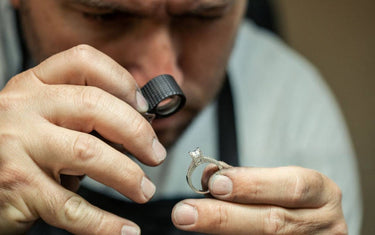
Staring at the bench all day is hard. A cheap jewelry loupe makes it worse. It brings headaches and ruined prongs. You need a jewelry loupe that feels invisible. Let's find your perfect match.
I. Structure and Imaging: Is it Triplet?

- Hard Threshold: This is the only criterion. Pass on single lenses. Only triplet jewelry loupes correct distortion. Three bonded glass layers fix the light. They ensure faceted edges stay straight.
- View of Field: Check the edges. Technicians must have edge-to-edge clarity. Do grid lines curve? If it has a fisheye effect, drop it. You cannot bright-cut or set stones with warped views.
- Matte Finish: Check the inner walls. They need a matte black lacquer coating. Bare metal inside bounces light. Matte paint kills stray reflections. It improves contrast. It stops annoying "ghost" images.
II. Lens Coating: Does it have an AR coating?

- Anti-glare: Repair stations are bright. Halogen lamps reflect off high-polish platinum. It acts like a mirror. An anti-reflective (AR) coating stops this flash. It eliminates glaring white spots. This stops dry eyes.
- Light Transmittance: AR coatings let light pass through. Solder joints look sharper. Deep claw settings stand out clearly. You see the metal pores. This reduces eye strain.
III. Magnification Division: Routine Repair or Micro-pave?

- 10x (Gold Standard): This does 90% of your work. It is the GIA standard. It offers a wide field. Depth of field is deep. Slight hand shakes do not blur the view.
- 15x-18x (Refinement Tools): Save this for micro-pave setting. V-prongs are tiny. This magnification checks if claws are level. It ensures bead seams fit tight.
- Above 20x (No-go): Do not use these for repairs. The focal length is too short. Your tweezers will vanish. It is only for reading laser inscriptions.
IV. Practical Handling: Can tools reach under the lens?
- 1-2cm Operational Lifeline: Do the core self-test. Focus on a ring. Check the gap. Sufficient space must exist. Tweezers, solder picks, and torches must move freely. If you bump the glass, it fails.
- Field of View: Get a 21mm lens. Top-tier lenses provide overall sharpness. You see the whole ring head. Cheaper lenses only clear the center. Total sharpness reduces neck craning. It saves your spine.
V. Lighting Solutions: Side Lighting vs. Independent Lighting

- Side Lighting Method: Experts pick unlit models. Raking light is better. Using side light sources creates shadows. Scratches stand out. Pits become obvious. Vertical built-in LEDs wash out surface textures.
- Color Rendering: If buying a lit model, check the specs. Choose CRI 90+. Aim for 5000K-5500K color. This mimics true daylight. Warm lights make silver look like yellow gold.
VI. Materials and Damping: High-Intensity Environments
- All-steel/brass housing: Your bench is dangerous. Tools drop. Hot flux spatters. It must withstand welding heat. Plastic housings melt quickly. Solid brass takes the beating.
- Professional-grade damping: Check the hinge screws. The swing must not be loose. It must stop instantly. It holds the angle. A loose loupe drops onto your work. It breaks your focus.
VII. Brands and Budgets: The Technician's List
1. Top-Tier Precision ($300 – $600+): Schneider Triplet Loupe L2

- The Industry Ceiling: Known as the "Master’s Choice," this German-engineered loupe is the ultimate investment for a lifelong career.
- Superior Optics: It features a massive 20mm lens diameter, offering the widest distortion-free field of view in the industry.
- Technical Edge: Its sophisticated Achromatic and Aplanatic lens system eliminates color fringing and edge warping, significantly reducing brain fatigue during extended inspections.
2. Professional Bench Standard ($90 – $120): Nikon Triplet Loupe (10x)

- The Powerhouse of Japanese Craftsmanship: This is the global benchmark for diamond graders and bench jewelers who prioritize optical neutrality.
- Ergonomic Design: Weighing a mere 15g, it is the lightest professional loupe available. This featherweight design is specifically engineered to prevent neck strain during long shifts.
- Crystal Clarity: While it utilizes a compact 13mm lens, its high-transmission glass provides a sharp, high-contrast image that allows technicians to spot the finest stress fractures or solder pits.
3. Entry-Level Utility ($25 – $40): Alfa Mirage® Carton Loupe Pro 10x

- Rugged Reliability: The "Workhorse" of the repair bench. This loupe is designed to survive the harsh environment of a jewelry workshop.
- Heavy-Duty Build: Unlike high-end delicate models, it features an aluminum die-casting body that can withstand heat and accidental drops on stone floors.
- Matte Performance: It retains professional standards with a matte black inner finish to eliminate internal reflections, making it a perfect, high-value backup for rough tasks like initial cleaning or metal prep.
VIII. Maintenance and Care: Extending Tool Life
- Blow before wiping: Bench dust is dangerous. Polishing rouge is a natural abrasive. Use a rocket blower first. Dry wiping is strictly prohibited. It scratches the lens fast.
- Regular Adjustment: Keep a small screwdriver ready. Fine-tune the shaft screws. Do this to maintain the stiff, professional feel.
- Fire Safety: Always case your loupe. Direct sunlight is risky. The lens creates a focusing effect. It can easily ignite paper or bench blocks.
Summary
Choosing the right jewelry loupe requires a focus on triplet structure, AR coatings, and practical working distance. A 10x magnification remains the primary choice for most repair tasks, while metal housing ensures durability at the bench. By following these professional standards, you protect your eyes and improve your craft.
If you are looking for professional-grade optics that meet these strict criteria, visit LuxGoldTools. We provide high-quality magnification tools designed specifically for the demands of the modern jewelry repair technician.
