
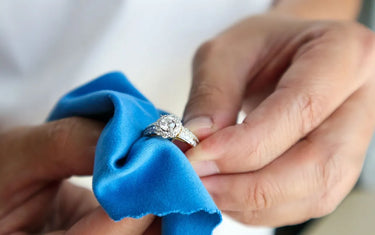
Has your favorite sterling silver ring or brass bracelet turned black? Don't worry—it’s just natural tarnish from contact with air and skin oils. Instead of using expensive ultrasonic cleaners or harsh chemicals, a professional jewelry polishing cloth can safely restore that brilliant shine in seconds. Here is your step-by-step guide to removing tarnish without damaging your pieces.
I. What is Tarnish & Why a Polishing Cloth Works?

Understanding Atmospheric Corrosion
Metals like sterling silver, copper, and low-karat gold naturally react with sulfur, oxygen, and moisture in the ambient air. This chemical reaction creates a thin, dull layer on the surface known as metal oxidation or tarnish. Skin oils, cosmetics, and everyday humidity accelerate this discoloration, turning your bright silver jewelry into a dark, matte gray or black.
The Polishing Cloth's Secret Weapon
A professional jewelry care cloth is far more than a standard microfiber wipe or regular cotton rag. It features a dual-action system engineered specifically for precious metals:
- Impregnated Micro-Abrasives: The inner fabric layer is infused with micron-sized, non-scratch polishing agents that gently lift away the tarnish film without grinding down the underlying metal.
- Anti-Tarnish Formula: As you rub, the cloth deposits a microscopic protective barrier. This chemical shield seals the surface, slowing down future oxidation and locking in the brilliant shine for much longer.
II. Before You Start: The "Can & Cannot" Check
Before applying any cleaning tool to your fine jewelry, you must evaluate the material composition. Different metals and gemstones require specific handling to avoid irreversible surface abrasion.
|
Suitable for Use (DO) |
Avoid or Use with Caution (DON'T) |
|
Sterling Silver (925): Ideal for solid silver rings, earrings, and flatware. |
Thin Gold/Silver-Plated Pieces: Vigorous rubbing can easily strip away the micro-layer of gold or silver, permanently exposing the base metal beneath. |
|
Solid Brass & Copper: Safely removes deep green or brown oxidation from solid industrial and decorative metals. |
Organic Gemstones: Pearls, turquoise, opals, and amber are highly porous and sensitive to the chemical compounds embedded in the fabric. |
|
Solid Gold (10K–24K): Excellent for restoring the warm, rich yellow luster of solid gold bands and pendants. |
Intentional Antiquing: Many vintage pieces use deliberate chemical liver-of-sulfur detailing to create dark contrast in deep recesses. Polishing will erase this artistic finish. |
III. Step-by-Step Guide: How to Vanish Tarnish
Follow this professional method to safely clean your jewelry collection without leaving micro-scratches or damaging delicate links.

Step 1: Clean First
Before attempting to polish, wash away surface dust, abrasive grit, and oily film. Submerge the jewelry in warm water mixed with a few drops of mild, lotion-free dish soap. Use your fingers to clean away surface grime, rinse thoroughly with clean water, and dry completely with a lint-free towel. If oil or moisture remains, it will clog the cloth and neutralize the active polishing agents.

Step 2: Apply Gentle Friction
Unfold the polishing cloth and use the inner treated layer. Hold the jewelry securely and rub the tarnished areas using straight, linear motions. Avoid rubbing in tight circles, as circular friction can trap stray dust particles and cause swirling micro-scratches on highly reflective metal surfaces.
Technical Pro-Tip for Chain Care: For delicate necklaces, snake chains, or tennis bracelets, never pull or tug the metal in mid-air, which can stretch or snap the links. Instead, lay the chain completely flat on a hard, clean table surface. Anchor one end firmly with your thumb, wrap the treated cloth around your index finger, and gently sweep along the length of the chain in a single forward direction.

Step 3: Execute the Detail Work
Intricate jewelry designs—such as engraved patterns, filigree, milgrain borders, or deep settings—are hotspots for stubborn, hard-to-reach tarnish. Do not force a thick cloth into these areas. Instead, wrap a single layer of the polishing fabric tightly around the tip of a wooden toothpick or a pointed cotton swab. This gives you a precise, rigid tool to clean out narrow crevices safely.

Step 4: Buff & Shine
Once the dark tarnish disappears, switch to the untreated outer layer of your polishing cloth (or a clean piece of premium chamois). Buff the entire surface briskly. This final step wipes away any residual dark polishing powder and burnishes the metal surface to a brilliant, mirror-like reflection.
IV. Critical Maintenance: Never Wash Your Cloth!
Important Warning: Never wash your jewelry polishing cloth. The heavy black streaks that appear during use are not dirt—they are the normal visual result of micro-abrasives lifting the metal oxides. Washing the cloth will permanently flush out the proprietary anti-tarnish formulas and polishing compounds, turning it into an ordinary, useless rag.
A single professional cloth is designed for long-term reuse. You can continue using every square inch of the fabric even if it is completely blackened from edge to edge. As long as it still lifts tarnish and restores a bright shine, the cloth remains fully active and does not need replacement.
Keep Your Collection Radiant
Regular maintenance is the ultimate key to preserving precious metals for posterity. A simple, one-minute wipe after wearing can revitalize a dull heirloom, preventing heavy, destructive oxidation from taking root in the first place.
If you want to keep your inventory, custom designs, or personal jewelry collection looking immaculate, a reliable, industrial-grade cleaning tool is essential. Explore the professional-tier selection at LuxgoldTools to find premium, high-density Jewelry Polishing Cloths designed to deliver a flawless, showroom-ready finish every single time.
