
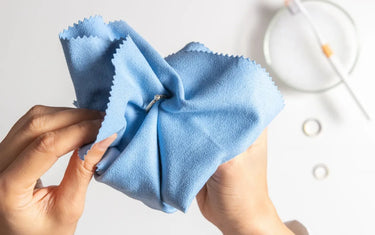
Using the wrong cloth can leave permanent "micro-scratches" on expensive gold, mirror-finish silver, or delicate gemstones. Microfiber and cotton are not interchangeable; they are specialized, complementary tools. This guide breaks down their material structures and mechanisms to help you choose the safest, most cost-effective care for your jewelry box.
I. Quick Summary: Microfiber vs. Cotton at a Glance
|
Comparison Metrics |
Microfiber Polishing Cloth |
Jewelry-Grade Cotton Cloth |
|
Material Composition |
Typically 80% polyester and 20% polyamide, utilizing split-fiber technology. |
100% premium, high-density, heavyweight natural cotton fabric. |
|
Core Mechanism |
Physical Capture: Uses microscopic star-shaped fiber cross-sections to adsorb and trap skin oils and sweat. |
Chemical + Micro-abrasive: Relies on factory-impregnated fine polishing powder and chemical de-oxidizing agents. |
|
Best Use Case |
Removing oils, fingerprints, water spots, and cosmetic residue; instantly enhancing the fire and brilliance of diamonds and gemstones. |
Targeting stubborn tarnish (blackening) on precious metals like gold, silver, and copper caused by sulfidation or oxidation. |
|
Gemstone Safety |
100% safe. Protects mirror finishes; suitable for all delicate or low-hardness gemstones. |
Requires caution. Contains micro-abrasives that can easily scratch organic or soft gemstones. |
|
Cleaning & Durability |
Can be washed repeatedly with neutral detergent without degrading. |
Must not be washed with water. Washing with water renders the cloth's built-in dry-polishing agents completely ineffective. |
II. Deep Dive: Microfiber Cloth – The Ultimate Daily Care Companion

The Scientific Principle of Microfiber
Microfiber utilizes advanced "split-fiber" technology. The individual strands are engineered to be one-hundredth the thickness of a human hair and feature a star-shaped cross-section. Acting like millions of tiny structural shovels, they directly lift and trap skin oils, perspiration, and cosmetic residues within the microscopic gaps of the fabric. Ordinary cloths, by contrast, lack these micro-grooves and merely smear oily contaminants across the jewelry's surface, leaving a hazy film.
Universal Application Scenarios
- Daily Degreasing of Precious Metals: It is ideally suited for the daily degreasing and brightening of all precious metal mountings, including gold, silver, platinum, and palladium, without relying on chemical agents.
- Restoring Fire to High-Hardness Gemstones: Quickly removes residual polishing wax, stubborn fingerprints, and heavy oil deposits from diamond facets and hard colored gems, instantly restoring their optical refraction and brilliance.
- Safe Dusting for Low-Hardness Gemstones: Highly recommended for organic or low-Mohs hardness gemstones—such as pearls, opals, agates, turquoise, topaz, and malachite. The ultra-soft weave ensures a flawless, scratch-free finish with zero micro-scratches.
Recommended Tools
- Product Spotlight: LUXOR® MERARD Microfiber Wiping Cloth
- Expert Insight: For users seeking a professional-grade execution of daily care, this premium French-made cloth features a high-density 200g/m² surface weave. It provides total peace of mind for delicate final inspections, easily navigating intricate prong settings and complex metal contours without snagging or shedding lint.
III. Deep Dive: Cotton Cloth – The Tarnish Terminator

The Scientific Principle of Treated Cotton
While an ordinary cotton cloth cannot remove oxidation layers, professional jewelry-grade cotton cloths are pre-impregnated with specialized fine polishing powders and anti-tarnish chemical agents. They employ a gentle dry-cleaning chemical mechanism to strip away the stubborn black or yellow tarnish layers that form on precious metal surfaces due to contact with atmospheric sulfides and oxygen.
Universal Application Scenarios
- De-Tarnishing Sterling Silver: Specifically designed to target silver jewelry that has turned black or dull due to prolonged storage. A gentle rub lifts heavy tarnish and restores a bright, lustrous gleam in seconds.
- Oxidation Removal for Karat Gold: Strips away the slight, dull oxidation layer that forms over time on solid gold or K-gold alloys, restoring the metal's original high-gloss, mirror-like finish.
Critical Warning
Because jewelry-grade cotton cloths contain chemical polishing agents and mild abrasives, never use them to vigorously scrub inexpensive gold-plated or gold-filled fashion jewelry. Since the electroplated gold layer on these pieces is extremely thin, repeated friction will completely wear away the gold layer, exposing the base copper beneath and permanently ruining the piece. Additionally, never use a treated cotton cloth on organic gemstones like pearls, which can be easily damaged by chemical agents.
Recommended Tools
- Product Spotlight: Connoisseurs UltraSoft® Silver / Gold Polishing Cloth
- Expert Insight: For restoring heavily oxidized precious metals, this classic dual-ply design utilizes an innovative 2-Step Dry-Cleaning System. The lighter-colored inner cloth lifts tarnish and applies an anti-tarnish protective shield, while the darker-colored outer cloth buffs the metal to a professional, mirror-like luster.
IV. Care & Lifespan: How to Maintain Universal Polishing Cloths

General Washing Guide for Microfiber Fabrics
When a microfiber cloth becomes soiled with accumulated skin oils and environmental grime, its physical performance can be fully restored through washing. Hand-wash the fabric in 40℃ warm water using a standard neutral detergent (such as a mild laundry liquid or dish soap) and allow it to air dry naturally.
- The Fabric Softener Danger: Never use fabric softener on microfiber! Softeners leave a microscopic waxy film on the fabric surface, clogging the star-shaped split fibers and causing the cloth to completely lose its unique ability to trap oils.

General Maintenance Rules for Treated Cotton Fabrics
- The Absolute "No-Wash" Rule: Never wash a jewelry-specific treated cotton cloth with water. Laundering will wash away the proprietary chemical formula and built-in polishing powders, rendering the cloth a useless piece of ordinary rag.
- The Blackening Phenomenon: When wiping tarnished silver or gold, the surface of the cotton cloth will quickly turn black. This is a completely normal chemical reaction showing that the tarnish is being successfully removed. The cloth provides exceptional longevity and will continue to work perfectly even when heavily blackened. Simply discard and replace the cloth once the fabric is completely dark and no longer restores a shine.
V. The "My Jewelry Box" Checklist: Which One Should You Buy?
Scenario A: You are a "Silver Jewelry Fanatic" or "Vintage Gold Lover"
- Jewelry Types: 925 Sterling Silver, Vintage Thai Silver, Solid 14K/18K Gold.
- Common Issues: Pieces left in the open turn black, yellow, or dull after long periods of non-use.
- Ultimate Choice: Treated Anti-Tarnish Cotton Cloth. It serves as the ultimate tarnish remover, allowing you to revitalize your metal collection with a quick, one-minute dry clean at home.
Scenario B: You are a "Diamond Enthusiast" or "Fine Gemstone Collector"
- Jewelry Types: Solitaire diamond rings, precious colored gemstones (rubies, sapphires, emeralds), and delicate pearl strands.
- Common Issues: Gemstones get covered in oily fingerprints, skincare residues, and sweat after just a short period of wear, appearing cloudy, hazy, or lifeless.
- Ultimate Choice: High-Density Microfiber Cloth. It offers 100% physical oil removal and is completely safe for low-hardness materials, providing a quick buffing action on the go with zero risk of micro-scratches.
Scenario C: You are a "Minimalist" who values practicality and cost-efficiency
- Needs: You want a single, durable jewelry cleaning cloth that handles a broad spectrum of daily maintenance without needing frequent replacement.
- Ultimate Choice: Premium Microfiber Cloth. Because it is fully washable and reusable, a single high-density cloth can maintain its structural integrity and cleaning performance for years, offering the best overall value for your money.
Conclusion
When organizing your jewelry maintenance routine, remember this simple rule of thumb: if you need to strip away stubborn tarnish and black oxidation from precious metals, look for a treated Cotton Cloth containing active polishing agents. If your goal is to safely wipe away daily fingerprints, brighten gemstones, or remove polishing compound residues from delicate settings, choose a high-density Microfiber Cloth.
To ensure your treasured pieces receive the best possible care, we highly recommend using both types together as a comprehensive dual-action jewelry care solution. Use a premium microfiber cloth for immediate daily maintenance after every wear, and keep a specialized cotton cloth on hand for periodic deep cleaning and de-tarnishing. This balanced approach is the most cost-effective and scientifically sound way to keep your entire collection looking showroom-ready for a lifetime.
Ready to give your collection the expert care it deserves? Explore our premium selection of professional-grade jewelry polishing cloths at LuxgoldTools and keep your treasures brilliant for a lifetime.
